

S4E10: Violette Morris
A powerhouse athlete with 14-inch biceps who dated Josephine Baker, smoked, and cut her breasts off to better fit behind the wheel of a race car: and when she was cast out of respectable society, she became a Nazi spy and a sadistic torturer known as the "hyena of the Gestapo."

Violette Morris, a powerhouse athlete with 14-inch biceps, discovered a love for trousers and fast driving while piloting ambulances for the Red Cross during the First World War. But her outrageous and mannish style – she dated Josephine Baker, smoked, and cut her breasts off to better fit behind the wheel of a race car – outraged the respectable upper-middle-class world of women's athletics. And when she was cast out of respectable society, she became a Nazi spy and a sadistic torturer known as the "hyena of the Gestapo."
SOURCES:
Colvin, Kelly Ricciardi. Gender and French Identity after the Second World War, 1944-1954: Engendering Frenchness. London ; New York, NY: Bloomsbury Academic, 2017.
Doyle, Jack. “How a Pioneering Lesbian Became the Nazis’ ‘Hyena.’” OZY, May 25, 2015. http://test-2017-elb-web-us-west-2.aws.ozymandias.com/flashback/how-a-pioneering-lesbian-became-the-nazis-hyena/40366.
Kessler, Martin. “Violette Morris: Pioneering Female Athlete Turned Nazi Spy.” WBUR, February 24, 2017. https://www.wbur.org/onlyagame/2017/02/24/gestapo-hitler-book-anne-sebba.
Mansky, Jackie, and Maya Wei-Haas. “The Rise of the Modern Sportswoman.” Smithsonian Magazine, August 18, 2016. https://www.smithsonianmag.com/science-nature/rise-modern-sportswoman-180960174/.
Papirblat, Shlomo. “Sporting Champion, Feminist Icon, Nazi Spy? The Extraordinary Life of Violette Morris.” Haaretz.Com. Accessed December 21, 2020. https://www.haaretz.com/life/books/.premium-sporting-champion-feminist-icon-nazi-spy-the-crazy-life-of-violette-morris-1.6869492.
Stryker, Susan. Transgender History. Seal Press, 2008.
FemBio: Frauen.Biografieforschung. “Violette Morris.” Accessed December 21, 2020. https://www.fembio.org/biographie.php/frau/biographie/violette-morris/.
Our intro music is Arpeggia Colorix by Yann Terrien, downloaded from WFMU's Free Music Archive and distributed under a Creative Commons Attribution-ShareAlike License. Our outro music is by DJ Michaeloswell Graphicsdesigner.
https://en.wikipedia.org/wiki/Violette_Morris#/media/File:Violette_Morris_1920.jpg

S4E9: Camilla Hall
Nothing about the life of this daughter of a Lutheran pastor seemed out of the ordinary –– until she joined a strange, cult-like organization called the Symbionese Liberation Army, and helped kidnap the heiress Patty Hearst.

Camilla Christine Hall was born on March 24th, 1945, in St Peter Minnesota. Her father was a Lutheran pastor, and her childhood was suburban and unremarkable. Like many of her generation, she would become involved in the anti-war movement and the New Left; unlike many of her generation, she would also become involved in Gay Liberation, and a strange cult-like organization called the Symbionese Liberation Army, which became infamous for bank robberies, murders –– and the 1974 kidnapping of heiress Patty Hearst.
SOURCES:
Hearings, Reports and Prints of the United States House Committee on Internal Security.
Honig, Harvey Hilbert. “A Psychobiographical Study of Camilla Hall.” Loyola University of Chicago, 1979. https://ecommons.luc.edu/luc_diss/1788.
Lauters, Amy. “On Camilla Hall.” Amy Lauters On Everything (blog), September 3, 2020. https://amylauters.com/2020/09/03/on-camilla-hall/.
Matusitz, Jonathan Andre, and Elena Berisha. Female Terrorism in America: Past and Current Perspectives. Contemporary Terrorism Studies. Abingdon-on-Thames: Routledge, 2020.
Our intro music is Arpeggia Colorix by Yann Terrien, downloaded from WFMU's Free Music Archive and distributed under a Creative Commons Attribution-ShareAlike License. Our outro music is by DJ Michaeloswell Graphicsdesigner.
Image via: https://upload.wikimedia.org/wikipedia/commons/7/78/Camilla_Hall_as_a_child.jpg

S4E8: Gertrude Stein
A novelist, playwright, poet, and, art collector and the hostess of a Paris salon that gathered the cream of interwar modernism. A semi-open lesbian, in the last years of her life, Stein sustained her lifestyle as an art collector and ensured her safety through the protection of powerful Vichy government officials.

Gertrude Stein is remembered as a novelist, playwright, poet, and, art collector –– and the hostess of a Paris salon that gathered the cream of interwar modernism, including Picasso, Hemingway, Fitzgerald, and Matisse. A semi-open lesbian, her books include Q.E.D., one of the earliest English-language lesbian novels, and Tender Buttons, a book of poems full of allusion to lesbian sexuality. But in the last years of her life, as a Jew living in Nazi-occupied France, Stein sustained her lifestyle as an art collector and ensured her safety through the protection of powerful Vichy government officials – part of a pattern of involvement in far-right, antisemitic, and fascist politics.
SOURCES:
Johnston, Georgia. The Formation of 20th-Century Queer Autobiography: Reading Vita Sackville-West, Virginia Woolf, Hilda Doolittle, and Gertrude Stein. Palgrave Macmillan US, 2007.
Malcolm, Janet. “Gertrude Stein’s War.” The New Yorker. June 2, 2003. https://www.newyorker.com/magazine/2003/06/02/gertrude-steins-war.
Pavloska, Susanna. Modern Primitives: Race and Language in Gertrude Stein, Ernest Hemingway, and Zora Neale Hurston. New York: Routledge, 1999.
Stein, Gertrude. Tender Buttons. Reissue edition. Mineola, N.Y: Dover Publications, 1997.
———. The Autobiography of Alice B. Toklas. Reissue edition. New York: Vintage, 1990.
Wineapple, Brenda. Sister Brother: Gertrude and Leo Stein. Lincoln: Combined Academic Publishing, 2008.
Our intro music is Arpeggia Colorix by Yann Terrien, downloaded from WFMU's Free Music Archive and distributed under a Creative Commons Attribution-ShareAlike License. Our outro music is by DJ Michaeloswell Graphicsdesigner.
Image via: https://commons.wikimedia.org/wiki/File:Gertrude_Stein_1935-01-04.jpg

S4E7: Prince Albert Victor
An intellectually dull man, charmless, with neither cultural interests nor creative talents, but who, due to sheer accident of birth, found himself permitted to indulge all his whims.

Today’s subject is the man who would be King, Prince Albert Victor, Duke of Clarence and Avondale, firstborn son of Edward VII, Grandson of Queen Victoria, known to his friends and family simply as “Eddy." Wrapped up in a sizzling sex scandal, he became a prime example of a British royal story: an intellectually dull man, charmless, with neither cultural interests nor creative talents, but who, due to sheer accident of birth, found himself permitted to indulge all his whims.
SOURCES:
Ackroyd, Peter. Queer City: Gay London from the Romans to the Present Day. London: Vintage, 2018.
Cook, Andrew. Prince Eddy: The King Britain Never Had. Stroud, Gloucestershire: The History Press, 2009.
Cook, Matt. London and the Culture of Homosexuality, 1885-1914. Cambridge: Cambridge University Press, 2009.
Hyde, H. Montgomery. The Cleveland Street Scandal. New York: Coward McCann, 1976.
Our intro music is Arpeggia Colorix by Yann Terrien, downloaded from WFMU's Free Music Archive and distributed under a Creative Commons Attribution-ShareAlike License. Our outro music is by DJ Michaeloswell Graphicsdesigner.
Image via: https://upload.wikimedia.org/wikipedia/commons/thumb/9/93/Prince_Albert_Victor%2C_Duke_of_Clarence_%281864-1892%29.jpg/460px-Prince_Albert_Victor%2C_Duke_of_Clarence_%281864-1892%29.jpg

S4E6: Truman Capote
A fantastically talented writer who rose from a difficult and violent childhood to literary fame and the highest echelons of society–only to be destroyed by his own demons.
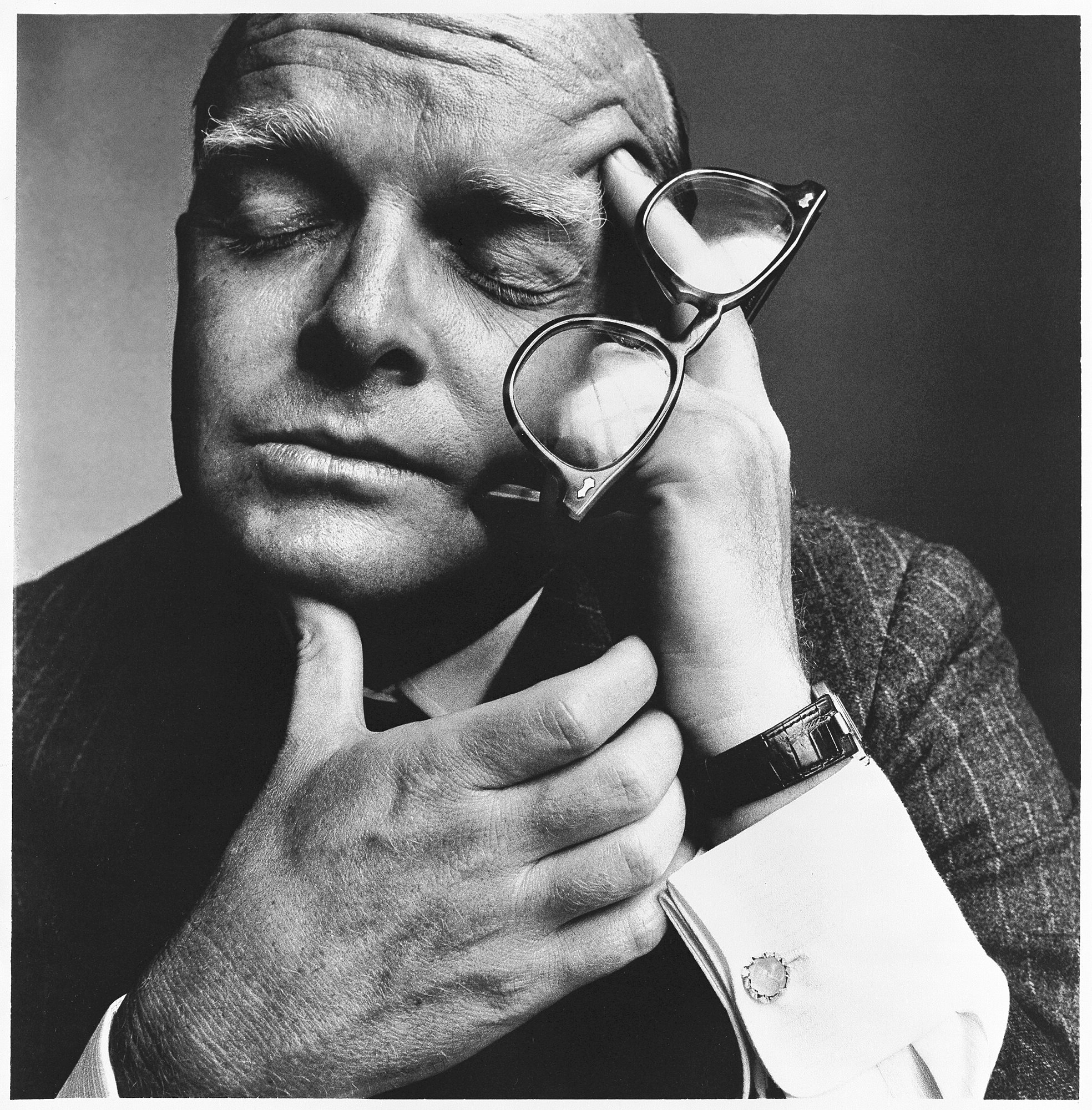
Born in a violent and difficult childhood in the American South, Truman Capote would rise to the highest levels of literary celebrity, praise, and fame: even joining the highly-exclusive jet set of 1960s and 1970s high society. Several of his short stories, novels, and plays have been praised as literary classics, including the novella Breakfast at Tiffany's (1958) and the true crime novel In Cold Blood (1966), which he labeled a "nonfiction novel". His works have been adapted into more than 20 films and television dramas. But Capote would be pursued by demons throughout his life – alcoholism, other forms of addiction, and crippling self-doubt which would end up leading him to destroy his own social reputation.
SOURCES:
Als, Hilton. “The Shadows in Truman Capote’s Early Stories.” The New Yorker, October 13, 2015. https://www.newyorker.com/books/page-turner/the-shadows-in-truman-capotes-early-stories.
Capote, Truman. Answered Prayers. Reissue edition. New York: Vintage, 1994.
———. Breakfast at Tiffany’s and Three Stories. Reprint edition. New York: Vintage, 1993.
———. In Cold Blood. Reprint edition. New York: Vintage, 1994.
———. Other Voices, Other Rooms. Reprint edition. New York: Vintage, 1994.
Clarke, Gerald. Capote: A Biography. Illustrated edition. New York: Simon & Schuster, 2010.
Our intro music is Arpeggia Colorix by Yann Terrien, downloaded from WFMU's Free Music Archive and distributed under a Creative Commons Attribution-ShareAlike License. Our outro music is by DJ Michaeloswell Graphicsdesigner.
Image via: https://commons.wikimedia.org/wiki/File:Truman_Capote_Moscot.jpg

S4E5: Carl Van Vechten
This white author, critic and photographer became enchanted with the Harlem Renaissance, approached Black cultures as a source of ideas that he could take and exploit, and perpetuated racist stereotypes in his work.

A man with a passion for the dangerous, subversive, and avant-garde; who eschewed the middle brow and loved the urbane and modern. Known in his life not just as a man of taste, but a tastemaker, someone who set the tone for elite cultural society in his lifetime; the white author, critic and photographer Carl Van Vechten became enchanted with the Harlem Renaissance, approached Black cultures as a source of ideas that he could take and exploit, and perpetuated racist stereotypes in his work.
SOURCES:
Bernard, Emily. Carl Van Vechten and the Harlem Renaissance: A Portrait in Black and White. 0 edition. Yale University Press, 2013.
Holmes, David G. “Cross-Racial Voicing: Carl Van Vechten’s Imagination and the Search for an African American Ethos.” College English 68, no. 3 (2006): 291–307. https://doi.org/10.2307/25472153.
Sanneh, Kelefa. “White Mischief.” The New Yorker, February 17, 2014. https://www.newyorker.com/magazine/2014/02/17/white-mischief-2.
White, Edward. “The Making of an American.” The Paris Review (blog), May 14, 2014. https://www.theparisreview.org/blog/2014/05/14/the-making-of-an-american/.
———. The Tastemaker: Carl Van Vechten and the Birth of Modern America. 1st edition. New York: Farrar, Straus and Giroux, 2014.
Woolner, Cookie. “‘Have We a New Sex Problem Here?’ Black Queer Women in the Early Great Migration.” Process: A Blog for American History (blog), October 24, 2017. http://www.processhistory.org/woolner-black-queer-women/.
Our intro music is Arpeggia Colorix by Yann Terrien, downloaded from WFMU's Free Music Archive and distributed under a Creative Commons Attribution-ShareAlike License. Our outro music is by DJ Michaeloswell Graphicsdesigner.
Image via: https://upload.wikimedia.org/wikipedia/commons/thumb/2/2e/Carl_Van_Vechten.jpg/500px-Carl_Van_Vechten.jpg

S4E4: Benjamin Britten
A fervent pacifist, antinationalist, and homosexual – with a deep, complex, and troubling love of children – Britten, through the strength of his music and through the nation’s desire to have a musical hero, became an utterly unlikely national celebrity.

The composer Benjamin Britten was a central figure of 20th century music; and the national composer that Britain had been searching for since the death of Henry Purcell in 1695. He never shook his Communist and pacifist sympathies –– even as he rose to the highest levels of elite British cultural production. A fervent pacifist, antinationalist, and homosexual –– with a deep, complex, and troubling love of children –– Britten, through the strength of his music and through the nation’s desire to have a musical hero of its own, became an utterly unlikely national celebrity.
Content warning: this episode contains discussions of sexual attraction to children.
SOURCES:
Bridcut, John. Britten’s Children. Main edition. London: Faber and Faber, 2006.
Britten, Benjamin. Peter Grimes. London: BBC, 1969. https://www.youtube.com/watch?v=3MyBUetbE38&t=1705s.
Conlon, James. “Message, Meaning and Code in the Operas of Benjamin Britten." Hudson Review LXVI, no. 3 (Autumn 2013). https://hudsonreview.com/2013/10/message-meaning-and-code-in-the-operas-of-benjamin-britten/.
Kildea, Paul. Benjamin Britten: A Life in the Twentieth Century. Allen Lane, 2013.
Ryan, Hugh. When Brooklyn Was Queer: A History. New York: St. Martin’s Press, 2019.
Our intro music is Arpeggia Colorix by Yann Terrien, downloaded from WFMU's Free Music Archive and distributed under a Creative Commons Attribution-ShareAlike License. Our outro music is by DJ Michaeloswell Graphicsdesigner.
Image via: https://upload.wikimedia.org/wikipedia/commons/3/30/Benjamin_Britten%2C_London_Records_1968_publicity_photo_for_Wikipedia.jpg

S4E3: Jeremy Thorpe
The “Very English Scandal” of disgraced Liberal MP Jeremy Thorpe reveals how the law is impervious to the informal networks of power in the British establishment, and how homosexuality was subject to a series of double standards, tolerated in the powerful but suppressed in the ordinary citizen, practiced in private and denied in public.

This is a story of sex, death and political malfeasance that will make Teddy Kennedy look like Anne of Green Gables. It has everything you’ve come to expect from a Bad Gays story about the English upper classes — psychosexual repression, violence, class prejudice, hypocrisy, the brutality and cheapness of life at the heart of the political system, and plenty of people named things like Rupert, Auberon and Emlyn.
But as ridiculous and kinky as the fruity rulers of Britain are, the story is darker than that. This story is also about the way the law is impervious to the informal networks of power in the British establishment, and how homosexuality was subject to a series of double standards, tolerated in the powerful but suppressed in the ordinary citizen, practiced in private and denied in public. Today we’re discussing the life of a man whose sexuality stole his chance at power, the MP and leader of the Liberal Party, the Right Honorable Jeremy Thorpe.
Content warning for child sexual abuse in the early parts of this story.
SOURCES:
Bloch, Michael. Jeremy Thorpe. London: Time Warner Books, 2004.
Freeman, Simon, and Barrie Penrose. Rinkagate: The Rise and Fall of Jeremy Thorpe. London: Bloomsbury Publishing, 1996.
Preston, John. A Very English Scandal: Sex, Lies, and a Murder Plot at the Heart of the Establishment. New York: Other Press, 2016.
Thorpe, Jeremy. In My Own Time: Reminiscences of a Liberal Leader. Edited by Duncan Brack. London: Politico’s Publishing Ltd, 1999.
Our intro music is Arpeggia Colorix by Yann Terrien, downloaded from WFMU's Free Music Archive and distributed under a Creative Commons Attribution-ShareAlike License. Our outro music is by DJ Michaeloswell Graphicsdesigner.
Image via: https://www.npg.org.uk/collections/search/portrait/mw208944/Jeremy-Thorpe?

S4E2: Liberace
A flamboyant pianist who became an unlikely icon of Middle American family entertainment.

This "deadly, winking, sniggering, snuggling, chromium-plated, scent-impregnated, luminous, quivering, giggling, fruit-flavored, mincing, ice-covered heap of mother love" rose to stardom playing "classical music without the boring parts" and didn't need to stay in the closet because he wore its entire contents. How could he become an emblem of Middle American family entertainment? The United States of the 1950s, 1960s, 1970s, and 1980s was undergoing enormous social change –– the Civil Rights Movement, the Summer of Love, Women’s Lib, the Stonewall Riots, Gay Liberation, and the beginning of the AIDS movement –– and Liberace was an entertainer who appealed to precisely those parts of the country who sought to resist those changes. Hated by classical music critics, he was beloved by audiences precisely because of the openness of his secret and the way he performed a kind of minstrel act that nevertheless won him fame, riches, and glory.
SOURCES:
Gabler, Neal. “Robert Harrison’s Scandalous Confidential Magazine.” Vanity Fair, April 2003. https://www.vanityfair.com/hollywood/2003/04/robert-harrison-confidential-magazine.
Liberace Music Video & Entrance 1981, 2008. https://www.youtube.com/watch?v=dioRwB4RvrQ.
O’Connor, Pauline. “Mapping the Many Razzle-Dazzle Homes of Liberace.” Curbed LA, May 24, 2013. https://la.curbed.com/maps/mapping-the-many-razzledazzle-homes-of-liberace.
Pyron, Darden Asbury. Liberace: An American Boy. Chicago: University of Chicago Press, 2013.
Rechy, John. “Randy Dandy.” Los Angeles Times, August 6, 2000. https://www.latimes.com/archives/la-xpm-2000-aug-06-bk-65295-story.html.
Thorson, Scott. Behind the Candelabra: My Life With Liberace. Head of Zeus, 2013.
Our intro music is Arpeggia Colorix by Yann Terrien, downloaded from WFMU's Free Music Archive and distributed under a Creative Commons Attribution-ShareAlike License. Our outro music is by DJ Michaeloswell Graphicsdesigner.
Image via: https://upload.wikimedia.org/wikipedia/commons/thumb/1/1c/Liberace_Colour_Allan_Warren.jpg/1920px-Liberace_Colour_Allan_Warren.jpg
S4E1: Cecil Rhodes
A British colonist and mining magnate who served as Prime Minister of the Cape Colony. An ardent white supremacist, he rose from being a sickly child to having a near-complete domination of the world diamond market.

Season 4 –– ! –– with apologies for socially-distanced audio quality. Today's victim was a British colonist and mining magnate who served as Prime Minister of the Cape Colony. An ardent white supremacist – no matter what revisionist historians and the right-wing press claim – he rose from being a sickly child to having a near-complete domination of the world diamond market. Come for the "private secretaries," stay for the Big Hole.
SOURCES:
Aldrich, Robert. Colonialism and Homosexuality. Abingdon-on-Thames: Routledge, 2003.
Brown, Robin. The Secret Society: Cecil John Rhodes' Plans for a New World Order. London: Penguin Books, 2015.
Jourdan, Philip. Cecil Rhodes: His Private Life By His Private Secretary. London: Bodley Head, 1911.
Rotberg, Robert I. The Founder: Cecil Rhodes and the Pursuit of Power. Oxford: Oxford University Press, 1988.
Our intro music is Arpeggia Colorix by Yann Terrien, downloaded from WFMU's Free Music Archive and distributed under a Creative Commons Attribution-ShareAlike License. Our outro music is by DJ Michaeloswell Graphicsdesigner.
Image via: https://commons.wikimedia.org/wiki/File:Cecil_Rhodes_karikat%C3%BAr%C3%A1ja.jpg

Special Episode: John Maynard Keynes (with Richard Power Sayeed)
A British civil servant who began his career in the colonial India Office, was part of the culturally and sexually libertine Bloomsbury Group, and would end up as one of history's most influential economists.

Despite beginning his career as a member of the civil service ruling Britain's colonial empire, John Maynard Keynes was also a key member of London's cultural and artistic elite, the Bloomsbury Group, whose libertine approach to sexuality and relationships marked them out from their stuffy Victorian forebears. A patron of art, literature, opera and ballet, Keynes' economic writings would go on to make him one of the 20th century's most influential economists. Huw discusses the life and theories of John Maynard Keynes with Richard Power Sayeed, author of 1997: The Future That Never Happened (Zed Books, 2017)
Our intro music is Arpeggia Colorix by Yann Terrien, downloaded from WFMU's Free Music Archive and distributed under a Creative Commons Attribution-ShareAlike License. Our outro music is by DJ Michaeloswell Graphicsdesigner.
Image via: https://commons.wikimedia.org/wiki/File:Keynes_1933.jpg

Special Episode: Radclyffe Hall (with Jana Funke)
The author of The Well of Loneliness – who became known as “sapphic Jesus” but whose flirtations with racism and fascism deserve more scrutiny.

The author of the iconic lesbian –– and trans –– novel The Well of Loneliness was born to privilege before consorting with suffragettes and radicals, embarking on scandalous lesbian affairs with singers, and writing the novel whose release and censorship would turn it into "the Lesbian bible" and them into "sapphic Jesus." But what problematic racial politics –– and flirtations with Fascism –– lie lurking in the biography of Radclyffe Hall, who offers a non-gay perspective on early 20th century theories of sexual inversion? Ben discusses these questions with special guest Dr. Jana Funke, co-editor of a critical edition of The Well of Loneliness set to be published by Oxford University Press in 2023.
Our intro music is Arpeggia Colorix by Yann Terrien, downloaded from WFMU's Free Music Archive and distributed under a Creative Commons Attribution-ShareAlike License. Our outro music is by DJ Michaeloswell Graphicsdesigner.
Image via: https://commons.wikimedia.org/wiki/File:Radclyffe_Hall,_ca._1930.jpg

S3E10: Lisa Miller
An American woman who gave birth to a child coparented with her partner Janet Jenkins, and then left Janet, became a self-proclaimed ex-lesbian, sued for single custody of their daughter, and when the courts decided against her, abducted their child and fled the country with the assistance of well-connected far-right pastors in 2009.

To close our season, the story of Lisa Miller, an American woman who gave birth to a child coparented with her partner Janet Jenkins, and then left Janet, became a self-proclaimed ex-lesbian, sued for single custody of their daughter, and when the courts decided against her, abducted their child and fled the country with the assistance of well-connected far-right pastors in 2009. Lisa and their daughter, Isabella, are still missing.
SOURCES:
Ball, Carlos A. The Right to Be Parents: LGBT Families and the Transformation of Parenthood. New York, NY: NYU Press, 2012.
Bollinger, Alex. “A Man Who Helped Kidnap a Lesbian’s Daughter Blames It All on Obama.” LGBTQ Nation, December 5, 2018. https://www.lgbtqnation.com/2018/12/man-helped-kidnap-lesbians-daughter-blames-obama/.
Eckholm, Erik. “Virginia Pastor Sentenced for Aiding Parental Kidnapping.” The New York Times, March 4, 2013, sec. U.S. https://www.nytimes.com/2013/03/05/us/kenneth-miller-convicted-of-aiding-in-parental-kidnapping.html.
———. “Which Mother for Isabella? Civil Union Ends in an Abduction and Questions.” The New York Times, July 28, 2012, sec. U.S. https://www.nytimes.com/2012/07/29/us/a-civil-union-ends-in-an-abduction-and-questions.html.
Edwards, David. “Fischer Calls for ‘Underground Railroad’ to Kidnap Children of LGBT Parents.” RawStory, August 8, 2012. https://www.rawstory.com/2012/08/fischer-calls-for-underground-railroad-to-kidnap-children-of-lgbt-parents/.
“Legal Recognition of LGBT Families.” San Francisco, Calif.: The National Center for Lesbian Rights, 2019. http://www.nclrights.org/wp-content/uploads/2013/07/Legal_Recognition_of_LGBT_Families.pdf.
“Man Who Helped Rob Lesbian Mom of Her Child Sentenced to 3 Years.” LGBTQ Nation, March 23, 2017. https://www.lgbtqnation.com/2017/03/man-helped-rob-lesbian-mom-child-sentenced-3-years/.
“Queer Kids of Queer Parents Against Gay Marriage!” Accessed May 14, 2020. https://queerkidssaynomarriage.wordpress.com/.
Rudolph, Dana. “A Very Brief History of LGBTQ Parenting.” Family Equality (blog), October 20, 2017. https://www.familyequality.org/2017/10/20/a-very-brief-history-of-lgbtq-parenting/.
“The Kidnapping of Isabella.” Birmingham, AL: Southern Poverty Law Center, February 15, 2017. https://www.splcenter.org/fighting-hate/intelligence-report/2017/kidnapping-isabella.
Our intro music is Arpeggia Colorix by Yann Terrien, downloaded from WFMU's Free Music Archive and distributed under a Creative Commons Attribution-ShareAlike License. Our outro music is by DJ Michaeloswell Graphicsdesigner.
Image via: https://www.nytimes.com/2014/10/09/us/new-charges-are-brought-in-same-sex-custody-case.html

S3E9: Morrissey
An essay on the Smiths frontman whose music and lyrics turned the abject aspects of the identities of so many queer teenagers into something that made them stand out and shine – and whose focus on working class cultures of masculinity began to turn towards the far right.

An essay on the Smiths frontman whose music and lyrics turned the abject aspects of the identities of so many queer teenagers into something that made them stand out and shine – and whose focus on working class cultures of masculinity began to turn towards the far right.
SOURCES:
Bret, David. Morrissey: Scandal & Passion. London: Robson Book Ltd, 2004.
Goddard, Simon. Mozipedia: The Encyclopedia of Morrissey and The Smiths. 8/29/10 edition. New York: Plume, 2010.
Jonze, Tim. “Bigmouth Strikes Again and Again: Why Morrissey Fans Feel so Betrayed.” The Guardian, May 30, 2019, sec. Music. https://www.theguardian.com/music/2019/may/30/bigmouth-strikes-again-morrissey-songs-loneliness-shyness-misfits-far-right-party-tonight-show-jimmy-fallon.
Morrissey. Autobiography. 1 edition. New York, NY: G.P. Putnam’s Sons, 2013.
Reynolds, Simon. “Pale Ire.” Bookforum, March 2014. https://www.bookforum.com/print/2005/in-his-long-awaited-memoir-morrissey-sheds-his-wilting-wallflower-image-12774.
Sandhu, Sukhdev. “Morrissey and Me: How an Ordinary Asian Fell in Love with the Smiths.” The Guardian, December 20, 2011, sec. Music.
https://www.theguardian.com/music/2011/dec/20/morrissey-and-me-the-smiths.
Thomas-Mason·May 31, Lee, and 2019. “Remembering When Cornershop Set Fire to Morrissey Posters, 1992.” Far Out Magazine (blog), May 31, 2019. https://faroutmagazine.co.uk/cornershop-set-fire-to-morrissey-posters-1992-racism/.
Our intro music is Arpeggia Colorix by Yann Terrien, downloaded from WFMU's Free Music Archive and distributed under a Creative Commons Attribution-ShareAlike License. Our outro music is by DJ Michaeloswell Graphicsdesigner.
Image via: https://upload.wikimedia.org/wikipedia/commons/8/87/Morrissey_crop_tie.jpg

S3E8: Aileen Wuornos
An itinerant sex worker turned by a media frenzy into a "man-hating lesbian prostitute who tarnished the reputations of her victims,” a useful foil for family-values string-em-up-dead politicians who wanted to show that they were tough on crime–and an unlikely lesbian hero.

In 1992, Aileen Carol Wuornos, an itinerant sex worker, was arrested for the murders of seven men in or near Volusia County, Florida in 1989 and 1990: all of them shot while Wuornos was on the job, all of them shot at point-blank range. She became, in the view of the public, according to the filmmaker Nick Broomfield, who made two documentaries about her and about the media storm that surrounded her, a "man-hating lesbian prostitute who tarnished the reputations of her victims,” a useful foil for family-values string-em-up-dead politicians who wanted to show that they were tough on crime–and an unlikely lesbian hero.
SOURCES:
Barrett-Ibarria, Sofia. “How Serial Killer Aileen Wuornos Became a Cult Hero.” Vice (blog), September 19, 2019.
https://www.vice.com/en_us/article/mbm3j4/how-serial-killer-aileen-wuornos-became-a-cult-hero.
Broomfield, Nick. Aileen Wuornos: The Selling of a Serial Killer. Documentary, Crime. Channel 4 Television Corporation, Lafayette Films, 1994.
Broomfield, Nick, and Joan Churchill. Aileen: Life and Death of a Serial Killer. Documentary, Crime. Lafayette Films, Channel 4 Television Corporation, 2003.
chesler, phyllis. “A Woman’s Right to Self—Defense: The Case of Aileen Carol Wuornos.” Off Our Backs 23, no. 6 (1993): 6–15.
Levina, Marina, and Diem-My T. Bui, eds. Monster Culture in the 21st Century: A Reader. London, UK: Bloomsbury Academic, 2013.
Pearson, Kyra. “The Trouble with Aileen Wuornos, Feminism’s ‘First Serial Killer.’” Communication and Critical/Cultural Studies 4, no. 3 (September 2007): 256–75. https://doi.org/10.1080/14791420701472791.
Vronsky, Peter. Female Serial Killers: How and Why Women Become Monsters. 1st edition. New York, N.Y: Berkley Books, 2007.
Our intro music is Arpeggia Colorix by Yann Terrien, downloaded from WFMU's Free Music Archive and distributed under a Creative Commons Attribution-ShareAlike License. Our outro music is by DJ Michaeloswell Graphicsdesigner.
Image via: https://upload.wikimedia.org/wikipedia/commons/2/22/Wuornos.jpg
S3E7: Roger Casement
The anti-colonial activist Roger Casement: we discuss his rise and fall, Britain’s hypocritical relationship with imperialism and colonialism, and secret black diaries full of "gentle thrusts" and "splendid erections."

At the height of his career, today's subject was a national hero in the UK, knighted by George V. His life ended as a traitor and a pervert, executed by hanging in Pentonville Prison before being thrown in an unmarked grave in the prison yard, his body covered in quicklime. His name was Roger Casement, and we'll talk about his rise and fall, Britain’s hypocritical relationship with imperialism and colonialism, and secret black diaries full of "gentle thrusts" and "splendid erections."
SOURCES:
Achebe, Chinua. An Image of Africa: And the Trouble with Nigeria. Penguin Great Ideas 100. London: Penguin Books, 2010.
Dudgeon, Jeffrey, and Roger Casement. Roger Casement: The Black Diaries : With a Study of His Background, Sexuality and Irish Political Life. Belfast, Northern Ireland: Belfast Press, 2016.
Goodman, Jordan. The Devil and Mr. Casement: One Man’s Battle for Human Rights in South America’s Heart of Darkness. 1st American ed. New York: Farrar, Straus and Giroux, 2010.
Halifax, Noel. “The Queer and Unusual Life of Roger Casement.” Socialist Review, February 2016. http://socialistreview.org.uk/410/queer-and-unusual-life-roger-casement.
Hochschild, Adam. King Leopold’s Ghost: A Story of Greed, Terror, and Heroism in Colonial Africa. Boston: Houghton Mifflin, 1999.
Inglis, Brian. Roger Casement. Belfast, Northern Ireland: Blackstaff Press, 1993.
Mitchell, Angus. “REPUTATIONS: Roger Casement and the History Question.” History Ireland (blog), June 30, 2016. https://www.historyireland.com/volume-24/reputations-roger-casement-history-question/.
O’Toole, Fintan. “The Multiple Hero.” The New Republic, August 2, 2012. https://newrepublic.com/article/105658/mario-vargas-llosa-dream-of-celt-fintan-otoole.
Toibin, Colm. Love in a Dark Time: And Other Explorations of Gay Lives and Literature. New York, NY: Scribner, 2004.
Our intro music is Arpeggia Colorix by Yann Terrien, downloaded from WFMU's Free Music Archive and distributed under a Creative Commons Attribution-ShareAlike License. Our outro music is by DJ Michaeloswell Graphicsdesigner.
Image via: https://upload.wikimedia.org/wikipedia/commons/thumb/2/25/Roger_Casement_Photo.jpg/512px-Roger_Casement_Photo.jpg

S3E6: Philip Johnson
The fascist-sympathizing architect who helped transform Modernism from egalitarian philosophy to elite fashion trend.

Philip Cortelyou Johnson may be more responsible than anyone for the shift from Modernism as a new way of living to Modernism as an elite bauble. Born into immense power and privilege, he was a deeply committed elitist, and dilettante fascist, who used his money and connections to whitewash his youthful (and ongoing) embrace of Hitler in specific and far-right politics in general. As a key curator and preacher of the Modernist gospel in the United States, he was central in divorcing the style from its egalitarian political aspirations. In response to criticism, he said: “I am a whore. Very well paid.”
PHOTO: BRUCE DAVIDSON/MAGNUM.
SOURCES:
Fixsen, Anna. “The Power and Paradox of Philip Johnson.” Metropolis, December 3, 2018. https://www.metropolismag.com/architecture/philip-johnson-biography-mark-lamster-interview/.
Goldberger, Paul. “A New Biography of the Architect Philip Johnson, the ‘Man in the Glass House.’” The New York Times, December 20, 2018, sec. Books.
Johnson, Philip, Robert A. M. Stern, and Kazys Varnelis. The Philip Johnson Tapes: Interviews by Robert A.M. Stern. 1st ed. New York: Monacelli Press, 2008.
Kaiser, Charles. The Gay Metropolis: The Landmark History of Gay Life in America. 1. Grove Press ed. New York: Grove Press, 2007.
Lamster, Mark. The Man in the Glass House: Philip Johnson, Architect of the Modern Century. First edition. New York, NY: Little, Brown and Company, 2018.
Ravenscroft, Tom. “Bjarke Ingels Meets Brazil’s President Jair Bolsonaro to ‘Change the Face of Tourism in Brazil.’” Dezeen, January 17, 2020. https://www.dezeen.com/2020/01/17/bjarke-ingels-jair-bolsonaro-brazil-president/.
———. “Criticism of Jair Bolsonaro Meeting Is ‘an Oversimplification of a Complex World’ Says Bjarke Ingels.” Dezeen, January 23, 2020. https://www.dezeen.com/2020/01/23/jair-bolsonaro-bjarke-ingels/.
Schulze, Franz. Philip Johnson: Life and Work. Chicago, Ill.: University of Chicago Press, 1996.
Stern, Mark J. “‘The Glass House’ as Gay Space: Exploring the Intersection of Homosexuality and Architecture.” Inquiries Journal 4, no. 06 (2012). http://www.inquiriesjournal.com/articles/651/the-glass-house-as-gay-space-exploring-the-intersection-of-homosexuality-and-architecture.
Wainwright, Oliver. “‘Norman Said the President Wants a Pyramid’: How Starchitects Built Astana.” The Guardian, October 17, 2017, sec. Cities. https://www.theguardian.com/cities/2017/oct/17/norman-foster-president-pyramid-architects-built-astana.
———. “The Despot Dilemma: Should Architects Work for Repressive Regimes?” The Guardian, January 27, 2020, sec. Art and design. https://www.theguardian.com/artanddesign/2020/jan/27/despot-dilemma-should-architects-work-for-repressive-regimes-bjarke-ingels.
Wortman, Marc. 1941: Fighting the Shadow War: A Divided America in a World at War. First edition. New York, NY: Atlantic Monthly Press, 2016.
———. “Famed Architect Philip Johnson’s Hidden Nazi Past.” Vanity Fair. Accessed April 27, 2020. https://www.vanityfair.com/culture/2016/04/philip-johnson-nazi-architect-marc-wortman.
Image via: https://upload.wikimedia.org/wikipedia/commons/0/07/Philip_Johnson.2002.FILARDO.jpg
S3E5: Elmyr de Hory
A dashing art forger whose fake Picassos, Matisses, and other masterpieces are still hidden in major collections and museums.

A fraud and liar of epic proportions: a dashing art forger whose difficulties selling his naturalistic work in the Modernist-dominated 20th century art market, and experience of persecution as a gay Jew in Central Europe during World War II, fueled the creation and sale of millions' worth of fake Picassos, Matisses, and other masterpieces: some of which are still hidden in major collections and museums.
SOURCES:
Forgy, Mark. The Forger's Apprentice: Life With the World's Most Notorious Artist. Scott's Valley, CA: CreateSpace, 2012.
Keats, Jonathon. Forged: Why Fakes are the Great Art of our Age. Oxford, UK: Oxford University Press, 2013.
Martinique, Elena. 'Elmyr de Hory - The Story of the Most Famous Forger in Art History.' Widewall.Ch, June 19, 2019. https://www.widewalls.ch/elmyr-de-hory-art-forger/
Our intro music is Arpeggia Colorix by Yann Terrien, downloaded from WFMU's Free Music Archive and distributed under a Creative Commons Attribution-ShareAlike License. Our outro music is by DJ Michaeloswell Graphicsdesigner.
Photo: Terry Daum (https://www.flickr.com/photos/arxiudelsoidelaimatgemallorca/32386870038)
S3E4: Barney Frank
The gravely-voiced Congressman whose heroic coming out paved the way for gay political power, but whose collaboration with finance capital helped define the Democrats' rightward shift.

On the "complicated" side of "evil and complicated" that makes up our show's motto, we present the story of the gravely-voiced Congressman who blazed trails for gay political involvement at the highest levels of power in Washington, only to spend the latter part of his career selling out the left to finance capital and excluding trans people from fights for non-discrimination legislation. Whip-smart, funny, and always ready with a biting comeback, Barney Frank came to embody the transformation of the Democratic Party away from the working class and towards a suburban party preoccupied with shallow diversity rather than true racial and economic justice.
SOURCES:
Aloisi, James. “Louise Day Hicks: ‘You Know Where I Stand.’” CommonWealth Magazine, October 16, 2013. https://commonwealthmagazine.org/politics/012-louise-day-hicks-you-know-where-i-stand/.
Battenfeld, Joe. “Barney Frank Resurfaces, to the Dismay of Bernie Sanders.” Boston Herald, January 29, 2020. https://www.bostonherald.com/2020/01/28/barney-frank-resurfaces-to-the-dismay-of-bernie-sanders/.
Chotiner, Isaac. “Barney Frank Is Not Impressed By Bernie Sanders.” Slate Magazine, March 30, 2016. https://slate.com/news-and-politics/2016/03/barney-frank-is-not-impressed-by-bernie-sanders.html.
Cottle, Michelle. “Bailout.” The New Republic, December 3, 2008. https://newrepublic.com/article/62857/bailout.
Dayen, David. Chain of Title: How Three Ordinary Americans Uncovered Wall Street’s Great Foreclosure Fraud. New York, NY: The New Press, 2016.
———. “Bank Deregulation 2.0 Is Here.” The American Prospect, July 18, 2018. https://prospect.org/api/content/eaadfd42-4d07-5e1f-b580-4b75f1860cc4/.
———. “Dismantling Dodd-Frank -- And More.” The American Prospect, February 6, 2017.
https://prospect.org/api/content/da53d9a4-10ff-57f6-97d0-a09f91c8cbd4/.
Dedman, Bill. “TV Movie Led to Prostitute’s Disclosures.” The Washington Post, August 27, 1989. https://www.washingtonpost.com/wp-srv/local/longterm/tours/scandal/gobie2.htm.
Frank, Barney. “My Life as a Gay Congressman.” Politico Magazone. Accessed April 13, 2020. http://www.politico.com/magazine/story/2015/03/barney-frank-life-as-gay-congressman-116027.html.
Geismer, Lily. Don’t Blame Us: Suburban Liberals and the Transformation of the Democratic Party. Princeton, NJ: Princeton University Press, 2014.
Henwood, Doug. “Radio Commentary, July 15, 2010.” LBO News from Doug Henwood (blog), July 16, 2010. https://lbo-news.com/2010/07/16/radio-commentary-july-15-2010/.
Molloy, Parker. “What Barney Frank Still Gets Wrong on ENDA.” The Advocate, October 1, 2014. http://www.advocate.com/commentary/2014/10/01/op-ed-what-barney-frank-still-gets-wrong-enda.
Schleier, Curt. “Barney Frank on Being Barney, Not Bernie.” Times of Israel. Accessed April 13, 2020. http://www.timesofisrael.com/barney-frank-on-being-barney-not-bernie/.
Sirota, David. “A ‘Grand Bargain’...For K Street.” HuffPost (blog), December 8, 2006. https://www.huffpost.com/entry/a-grand-bargainfor-k-stre_b_35853.
———. “Four Reasons to Oppose the Bush-Obama Request for Another $350 Billion Bailout.” Common Dreams. Accessed April 13, 2020. https://www.commondreams.org/views/2009/01/13/four-reasons-oppose-bush-obama-request-another-350-billion-bailout.
Toobin, Jeffrey. “Barney’s Great Adventure.” The New Yorker, January 5, 2009. https://www.newyorker.com/magazine/2009/01/12/barneys-great-adventure.
Our intro music is Arpeggia Colorix by Yann Terrien, downloaded from WFMU's Free Music Archive and distributed under a Creative Commons Attribution-ShareAlike License. Our outro music is by DJ Michaeloswell Graphicsdesigner.
Image via: https://upload.wikimedia.org/wikipedia/commons/thumb/2/26/Barney_Frank.jpg/1280px-Barney_Frank.jpg

S3E3: Lord Castlereagh
The Anglo-Irish aristocrat, politician and statesman Robert Stewart, 2nd Marquess of Londonderry: better known, like Bjork or Madonna, by his mononym - Castlereagh.
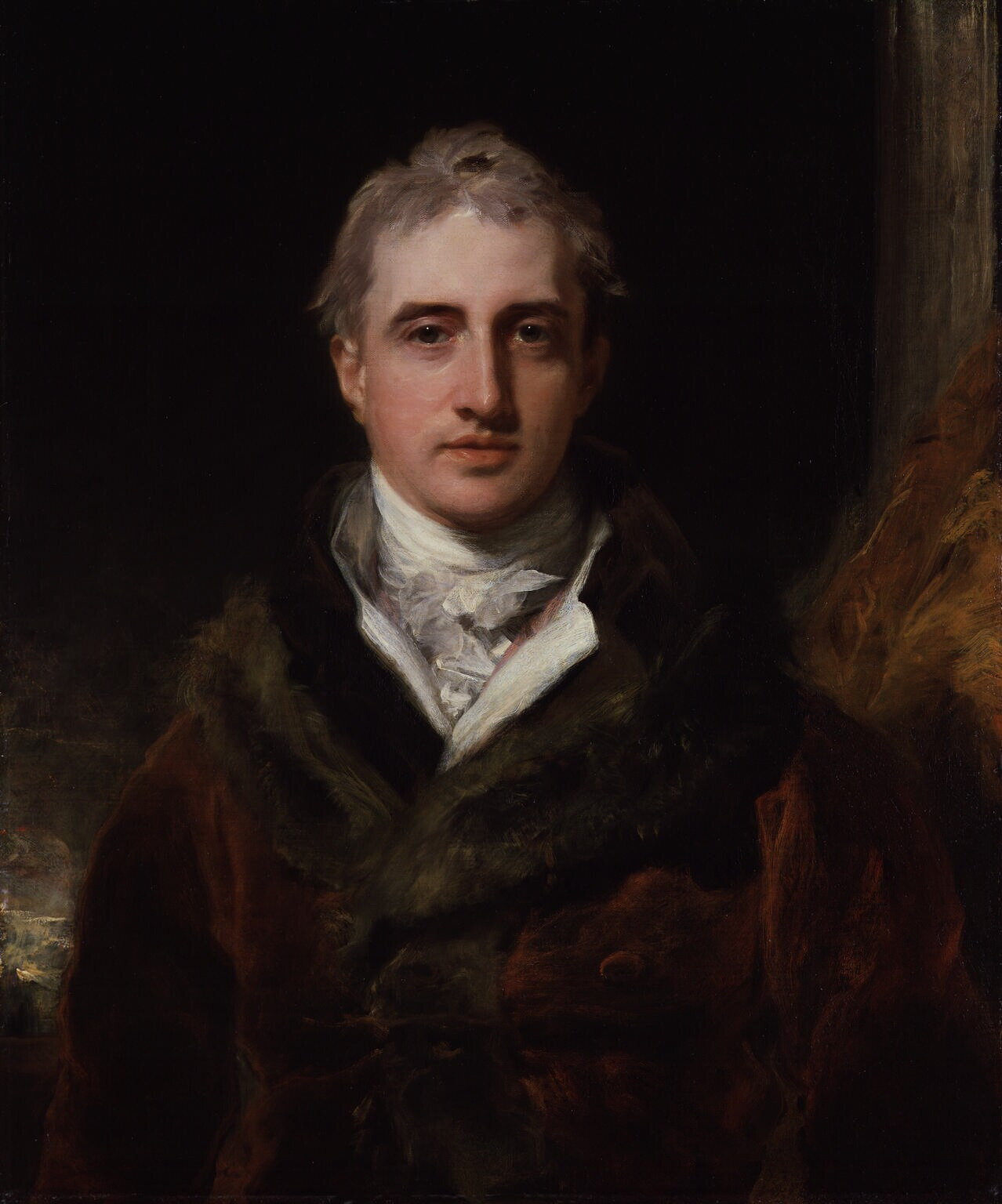
The Anglo-Irish aristocrat, politician and statesman Robert Stewart, 2nd Marquess of Londonderry: better known, like Bjork or Madonna, by his mononym - Castlereagh. A Whig politician, he was hated by the populations of both England and Ireland for his support of vicious repression against liberal, reformist, and radical politics and activism. Lord Byron put it best: "Posterity will ne'er survey / A nobler grave than this: / Here lie the bones of Castlereagh: / Stop, traveller, and piss."
SOURCES:
Ackroyd, Peter. Queer City: Gay London from the Romans to the Present Day. London, UK; New York, NY: Random House, 2017.
Bew, John. Castlereagh: A Life. Oxford, UK: Oxford University Press, 2012.
Hyde, Harford Montgomery. The Strange Death of Lord Castlereagh. London, UK: Heinemann, 1959.
Kiernan, Victor. The Duel in European History: Honour and the Reign of Aristocracy. London, UK: Zed Books Ltd., 2016.
Norton, Rictor, ed. “Homosexuality in Nineteenth-Century England,” January 15, 2020. http://rictornorton.co.uk/eighteen/nineteen.htm.
Thompson, E. P. The Making of the English Working Class. London, UK; New York, NY: Penguin, 1991.
Our intro music is Arpeggia Colorix by Yann Terrien, downloaded from WFMU's Free Music Archive and distributed under a Creative Commons Attribution-ShareAlike License. Our outro music is by DJ Michaeloswell Graphicsdesigner.
Image via: https://upload.wikimedia.org/wikipedia/commons/5/51/Lord_Castlereagh_Marquess_of_Londonderry.jpg